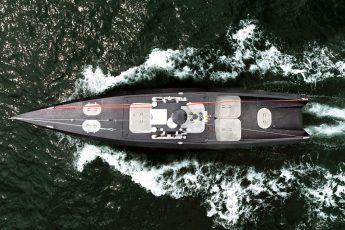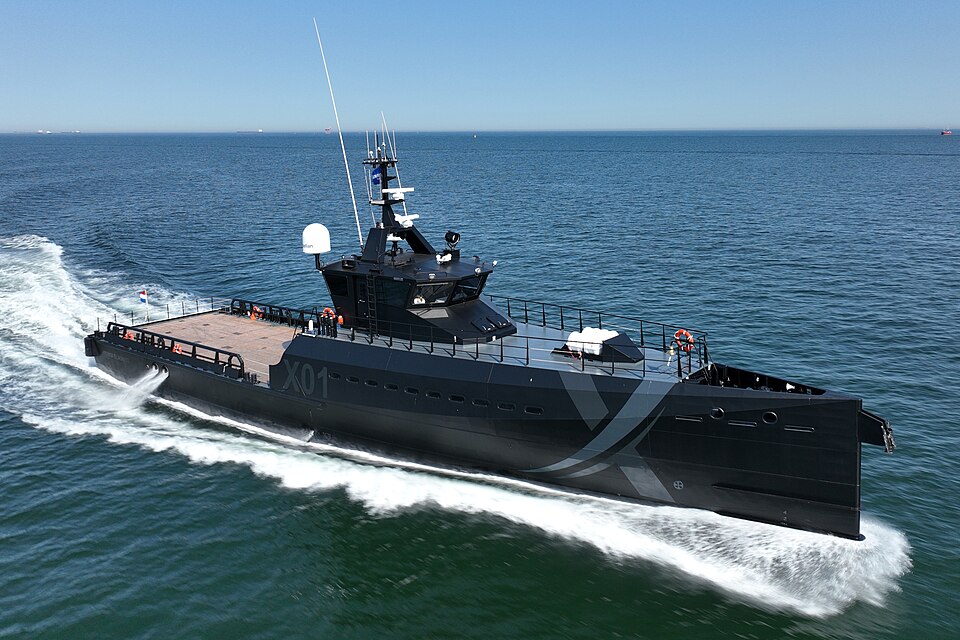
The future of naval warfare will not be defined solely by the size or number of warships in a fleet. Increasingly, operational advantage will depend on how effectively crewed vessels, autonomous platforms, sensors and command systems can operate together.
This is the principle behind the Hybrid Navy, an emerging approach to maritime defence that combines traditional naval capabilities with uncrewed systems, artificial intelligence (AI) and distributed digital networks.
For the Royal Navy, the transition is already underway. The UK’s Defence Investment Plan commits £1.5 billion towards developing the Hybrid Navy, while the commissioning of the Royal Navy’s first Autonomous Squadron in November 2026 demonstrates the growing operational importance of uncrewed maritime systems.
However, deploying autonomous vessels is only part of the challenge.
For a Hybrid Navy to function effectively, its different platforms must be capable of processing information, making appropriate decisions and sharing operational intelligence, even when communications are unreliable or unavailable.
This is where Edge Architecture becomes essential.
By distributing computing and AI capabilities across the fleet, rather than relying exclusively on centralised processing, naval forces can create a more responsive, resilient and integrated operational environment.
What Is a Hybrid Navy?
A Hybrid Navy is a naval force that integrates crewed warships, submarines and aircraft with uncrewed and autonomous systems operating on the surface, underwater and in the air.
Rather than using autonomous platforms as isolated assets, the objective is to create a connected force in which different vessels and systems contribute to shared operational goals.
A future naval task group, for example, might include a crewed frigate operating alongside uncrewed surface vessels (USVs), extra-large uncrewed underwater vessels (XLUUVs) and autonomous aerial systems.
Each platform could undertake a different role, from intelligence gathering and persistent surveillance to environmental monitoring, reconnaissance and supporting maritime security operations.
The potential advantages include:
- Greater operational reach: Autonomous platforms can extend surveillance and sensing capabilities beyond the immediate position of crewed vessels.
- Persistent presence: Uncrewed systems can support extended missions without the same onboard personnel requirements.
- Reduced personnel exposure: Higher-risk tasks can be undertaken without placing crews directly in hazardous operating areas.
- Distributed capabilities: Sensors and other mission systems can be deployed across multiple platforms rather than concentrated on a single ship.
- Greater operational flexibility: Commanders can combine crewed and uncrewed assets according to changing mission requirements.
The Royal Navy’s plans for a new Common Combat Vessel reinforce this approach. According to the Ministry of Defence, the vessel is intended to coordinate uncrewed systems operating in the air, on the surface and beneath the sea.
But integrating these capabilities presents a significant technical challenge.
A Hybrid Navy cannot depend on every vessel maintaining a continuous, high-bandwidth connection to a central command system. Maritime operations take place across vast distances, often in contested environments where communications may be restricted, degraded or deliberately disrupted.
An effective Hybrid Navy therefore needs an architecture that allows individual platforms to operate intelligently while remaining part of a coordinated force.
What Is Edge Architecture in Maritime Defence?
Edge Architecture is a distributed computing approach in which data processing, AI analysis and operational decision-making capabilities are located close to where information is generated and actions are required.
In maritime defence, this means placing relevant computing capabilities aboard vessels, underwater platforms, aircraft and other deployed systems rather than relying entirely on remote servers or shore-based facilities.
This approach is closely associated with edge computing, which the Internet Engineering Task Force describes in RFC 9556 as distributing computing and storage resources closer to devices, sensors and the points where decisions are made.
Consider an autonomous surface vessel navigating through a busy maritime environment.
Its onboard sensors may continuously collect information from radar, cameras, AIS receivers and other sources. The vessel must interpret this information, identify potential navigational hazards and determine appropriate responses.
If every decision required transmitting raw sensor data to a remote control centre and waiting for instructions, the system would become highly dependent on communications availability and latency.
With an edge-based architecture, the vessel can process relevant information locally.
AI software can interpret sensor inputs, maintain situational awareness and support navigational decisions directly aboard the platform, within its authorised operating parameters.
Information can still be shared with other vessels and command centres, but the platform does not need to rely on continuous connectivity for every routine decision.
For naval operations, this distinction is fundamental.
Edge Architecture versus centralised computing
Centralised systems remain valuable for large-scale intelligence analysis, mission planning, fleet coordination and the management of information gathered across multiple platforms.
However, they are not always suited to time-critical vessel control.
A Hybrid Navy is therefore likely to require a combination of processing environments:
Onboard edge computing: Supports local sensor processing, navigation, obstacle avoidance and authorised autonomous functions.
Task-group computing: Enables vessels operating together to share information, coordinate activities and contribute to a common operational picture.
Shore-based and central systems: Support broader mission planning, intelligence analysis, supervision and strategic command.
The objective is not to eliminate centralised systems but to distribute responsibilities appropriately.
In a well-designed architecture, tasks requiring immediate local responses can be handled close to the platform, while information and decisions requiring wider oversight remain accessible to authorised personnel.
Why Edge Architecture Is Essential to the Hybrid Navy
1. Reducing dependence on continuous communications
Communications are among the most significant operational challenges facing autonomous maritime systems.
Satellite links, radio networks and other communications channels can be affected by distance, weather, bandwidth restrictions, interference and deliberate disruption.
Naval systems must therefore be designed to operate under degraded, disrupted, intermittent or limited connectivity conditions.
An edge architecture allows relevant onboard functions to continue when a connection to shore or another vessel becomes unavailable.
For example, an autonomous vessel conducting an authorised surveillance mission may still need to maintain safe navigation, recognise obstacles and follow predefined contingency procedures during a communications interruption.
This does not mean removing human authority.
Instead, it means establishing clear boundaries around which functions can continue independently, which decisions require approval and how the system should respond when communications cannot be restored.
The result is a more resilient operational capability that is less dependent on any single communications link.
2. Enabling faster decisions through onboard AI
Maritime environments can change rapidly.
Other vessels may alter course, weather conditions can deteriorate and unexpected obstacles may appear within a vessel’s operating area.
For autonomous platforms, the ability to interpret information and respond appropriately is critical.
By placing AI processing close to onboard sensors, edge computing reduces the need to transmit large quantities of information elsewhere before a decision can be made.
This is particularly important for time-sensitive functions such as obstacle detection, collision avoidance and tactical route adjustment.
MarineAI’s work on sensor fusion for autonomous vessels illustrates the importance of combining information from multiple sensor sources to generate a more complete understanding of a vessel’s surroundings.
Within an edge architecture, this understanding can inform local decisions while relevant information is also shared across the wider fleet.
3. Supporting distributed maritime situational awareness
A central objective of the Hybrid Navy is to allow multiple platforms to contribute towards a shared understanding of the maritime environment.
A crewed vessel may possess sophisticated radar and sonar systems, while an uncrewed surface vessel can carry sensors into another operating area. An underwater platform may collect information beneath the surface.
Individually, these systems provide valuable observations.
When appropriately integrated, they can contribute to a broader maritime situational picture.
Edge processing can help by converting raw sensor inputs into more useful information before transmission.
For example, rather than continuously transmitting every element of a high-volume sensor feed, a platform may be able to share selected observations, identified contacts, confidence assessments or changes in the operational environment.
This can reduce communications demands while helping personnel focus on information relevant to their decisions.
The principle is particularly relevant to the Royal Navy’s Atlantic Bastion programme, which seeks to integrate autonomous vessels, advanced sensing and digital infrastructure with established naval capabilities.
In November 2026, the Ministry of Defence announced a £90 million framework for Atlantic Net, intended to connect new autonomous systems and sensors with the Royal Navy’s crewed fleet to improve underwater surveillance.
While the precise technical architecture will depend on individual systems, the programme demonstrates the importance of integrating distributed sensors and platforms into a coherent maritime capability.
4. Improving interoperability between crewed and uncrewed vessels
A Hybrid Navy will inevitably incorporate equipment developed by different manufacturers, using different software, sensors and control systems.
Without effective integration, there is a risk of creating multiple autonomous platforms that operate successfully in isolation but cannot work together efficiently.
Edge Architecture must therefore be considered alongside interoperability.
Systems need suitable interfaces, consistent approaches to information exchange and the ability to integrate with wider command-and-control arrangements.
This does not necessarily require every platform to use identical software.
Instead, modular architectures and agreed data interfaces can enable different systems to contribute to common operational objectives while retaining their specialist capabilities.
The Royal Navy has already demonstrated aspects of this approach through its Trident Sprint technology trials.
During these exercises, uncrewed boats, drones and digital systems were connected through a mesh network, allowing information to be shared between platforms without relying solely on a single communications hub.
Such experimentation highlights the importance of treating the Hybrid Navy as an integrated digital environment rather than simply a collection of individual vessels.
5. Maintaining human oversight and operational control
Increasing autonomy does not remove the requirement for effective command and control.
Naval commanders must retain appropriate authority over mission objectives, operating constraints and decisions that require human judgement or authorisation.
Edge-based systems can support this by separating immediate platform-level functions from decisions requiring wider operational oversight.
An autonomous vessel might independently maintain its route, monitor surrounding traffic and respond to navigational hazards.
Meanwhile, a human operator may remain responsible for approving mission changes, reviewing significant events or authorising actions beyond the platform’s delegated authority.
The architecture must also support monitoring, accountability and the ability to intervene where the communications environment and system design permit.
This relationship between independence and supervision is central to the effective integration of crewed and uncrewed maritime systems.
From Individual Platforms to an Integrated Hybrid Fleet
The evolution towards a Hybrid Navy is not simply a theoretical discussion.
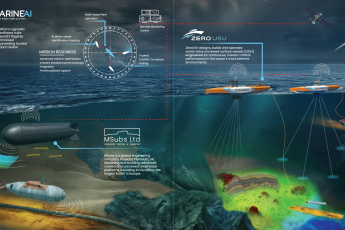
MarineAI is already involved in projects that demonstrate different aspects of the transition, from AI-assisted decision support aboard crewed vessels to autonomy systems for surface and underwater platforms.
These projects operate in different environments and have different requirements, but collectively illustrate how software-based intelligence can support a more flexible maritime force.
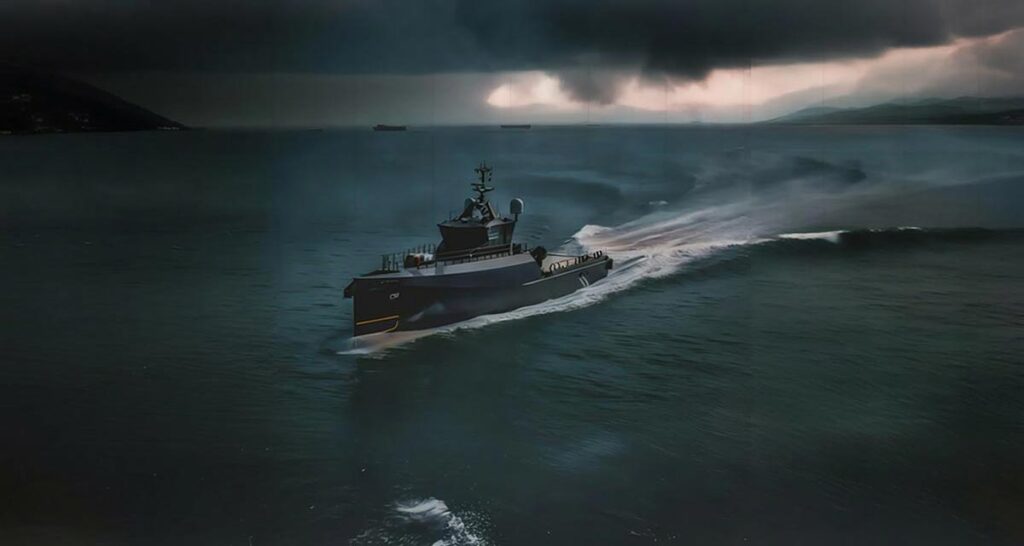
XV Patrick Blackett: AI decision support aboard a crewed vessel
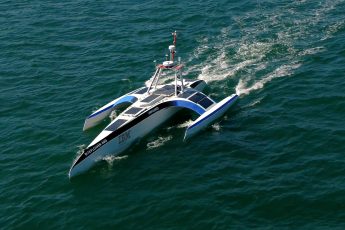
The Royal Navy’s XV Patrick Blackett is a Navy X trials vessel used to evaluate emerging maritime technologies, including AI and autonomy.
MarineAI’s GuardianAI™ software has been deployed aboard the vessel to provide route recommendations derived from situational awareness and tactical path-planning capabilities.
Importantly, the software provides decision support without taking control of the vessel.
This demonstrates how AI capabilities can be introduced into existing crewed platforms, supporting personnel through improved information processing and navigation recommendations.
For the Hybrid Navy, such capabilities represent an important part of integrating intelligent systems into established naval operations.
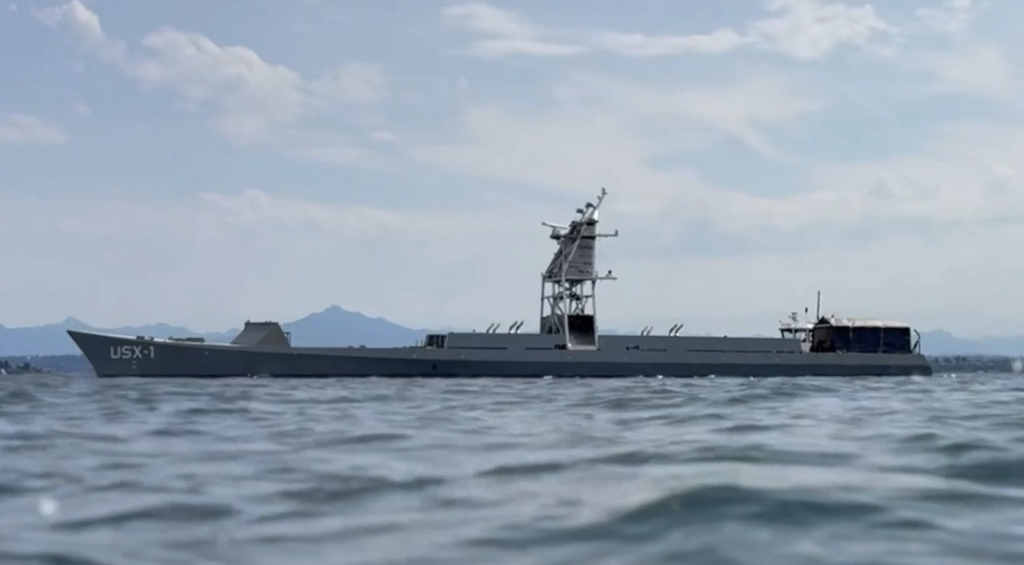
NOMARS: Autonomous operation on an uncrewed surface vessel
The NOMARS programme takes a different approach.
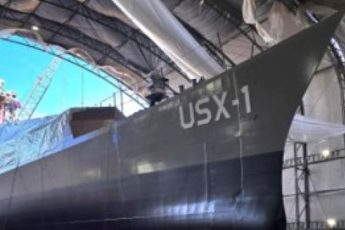
Developed through the US Defense Advanced Research Projects Agency’s No Manning Required Ship programme, the 55-metre USX-1 Defiant has been designed specifically for uncrewed operation.
MarineAI provides the vessel’s GuardianAI executive autonomy software stack, supporting situational awareness, route optimisation, tactical path planning, obstacle avoidance and vessel control functions.
The programme highlights the importance of capable onboard autonomy for vessels intended to undertake extended missions without a permanent crew.
For these platforms, intelligent local processing is essential to their ability to interpret their surroundings and undertake authorised navigational functions.
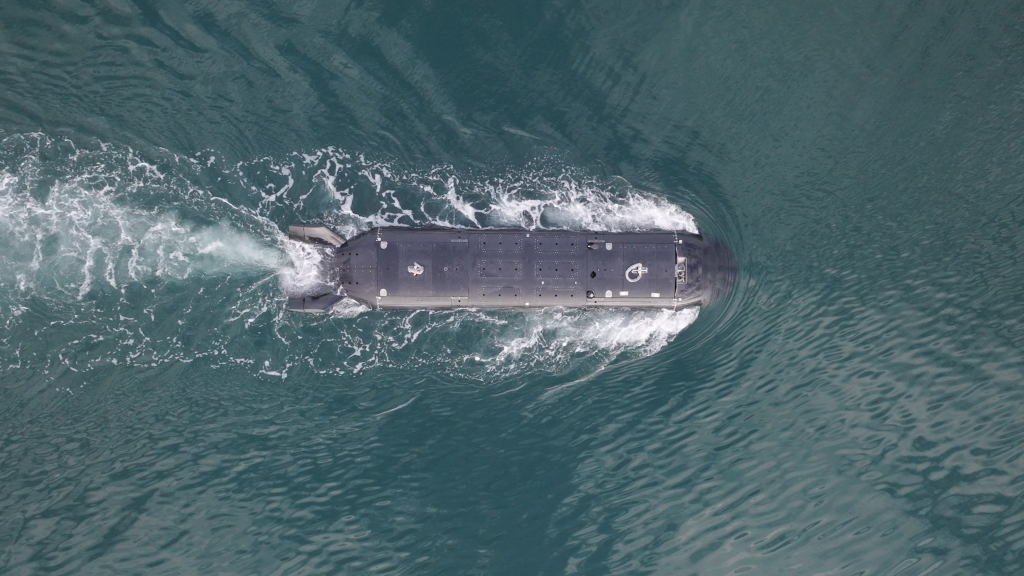
CETUS: Autonomous intelligence beneath the surface
Underwater operations introduce additional challenges.
Communications are typically more constrained beneath the surface, making onboard intelligence and carefully designed autonomy particularly important.
Through the Royal Navy’s CETUS project, MarineAI has been responsible for autonomy software aboard XV Excalibur, an experimental extra-large uncrewed underwater vessel developed by MSubs.
The software provides tactical routing, situational awareness and executive control of vessel actuators and electrical systems.
XV Excalibur also demonstrates three-dimensional obstacle avoidance, an essential consideration for autonomous underwater navigation.
The project illustrates the role that onboard processing and intelligent control systems can play in enabling complex uncrewed underwater operations.
Together, XV Patrick Blackett, NOMARS and CETUS demonstrate different applications of maritime AI across crewed, uncrewed surface and underwater platforms.
They also highlight why the development of a Hybrid Navy requires flexible autonomy technologies that can be adapted to different operational environments.
Building a Resilient Digital Architecture for Maritime Defence
While onboard intelligence is an important foundation, achieving effective fleet integration requires more than placing AI software on individual vessels.
Future Hybrid Navy architectures will need to address several wider requirements.
Modularity and scalability: Software capabilities should be capable of integration across different classes of vessel and adapted as mission requirements evolve.
Resilient communications: Platforms must be able to exchange relevant information when connectivity is available while maintaining safe, authorised operations during interruptions.
Interoperable data: Information from different sensors and systems needs to be usable across the wider operational environment, with appropriate context and quality indicators.
Cybersecurity: Distributed systems increase the number of digital components that require protection. Secure interfaces, access controls and carefully managed software updates are essential.
Assurance and accountability: Autonomous functions must be tested against defined requirements, with clear operating limitations, human responsibilities and appropriate records of system behaviour.
Human-machine integration: Information must be presented in a way that supports effective human understanding, supervision and decision-making.
These requirements also extend beyond the vessels themselves.
Shore-based facilities, maintenance systems, communications infrastructure and fleet command arrangements must all contribute to the wider architecture.
As the Royal United Services Institute argues in its analysis, Hybrid Navy: Building the Maritime Operating System, the integration of software, data and digital infrastructure is as important as the platforms themselves.
The challenge is therefore architectural as much as technological.
The Role of MarineAI in the Future Hybrid Navy
For MarineAI, the development of the Hybrid Navy is closely aligned with the company’s work in intelligent maritime navigation, situational awareness and autonomous control.
The GuardianAI™ Suite has been developed as a modular platform providing capabilities for crewed and uncrewed vessels, including autonomy, intelligent sensing and AI-supported decision-making.
Its applications range from enhancing situational awareness aboard crewed vessels to supporting autonomous navigation and control on uncrewed platforms.
This flexibility is particularly relevant as naval forces seek to integrate intelligent systems into both existing vessels and emerging autonomous platforms.
An effective Hybrid Navy will need to incorporate different levels of autonomy according to platform requirements, mission objectives and the role of human operators.
It will also need software capable of operating in challenging maritime conditions, integrating relevant sensor data and supporting decision-making at the point where it is required.
MarineAI’s experience across surface and underwater projects provides a practical foundation for contributing to these emerging requirements.
Conclusion: The Hybrid Navy Needs an Intelligent Architecture
The transition towards a Hybrid Navy represents a significant development in maritime defence.
Combining crewed warships with autonomous vessels offers the potential to extend operational reach, improve persistence and distribute capabilities across a more flexible naval force.
But the success of this approach will depend on more than the number or sophistication of individual platforms.
The defining capability of a Hybrid Navy will be its ability to connect distributed intelligence with coordinated human command.
Edge Architecture provides an important part of that foundation, enabling relevant data processing and autonomous functions to operate close to where they are needed while supporting information exchange and oversight across the wider fleet.
As naval forces develop increasingly integrated maritime capabilities, the importance of modular software, resilient communications and onboard AI will continue to grow.
For MarineAI, projects such as NOMARS, XV Patrick Blackett and CETUS demonstrate how intelligent maritime systems can support different elements of this transition.
The next generation of naval capability will not simply involve crewed vessels operating alongside autonomous ones. It will depend on how effectively those platforms can sense, process, communicate and operate together as an integrated force.
Frequently Asked Questions
What is a Hybrid Navy?
A Hybrid Navy is a naval force that combines traditional crewed warships, submarines and aircraft with uncrewed and autonomous platforms. These systems are integrated through communications, data sharing, artificial intelligence and command-and-control arrangements to support coordinated maritime operations.
What is Edge Architecture in naval operations?
Edge Architecture is a distributed computing approach that places data processing, AI and relevant decision-making capabilities close to operational systems, such as aboard ships, submarines and autonomous vessels. This reduces dependence on centralised processing and supports faster responses and greater resilience when communications are limited.
Why is edge computing important for autonomous naval vessels?
Edge computing enables autonomous vessels to process sensor information and perform authorised functions locally. This is particularly valuable for navigation, obstacle avoidance and maintaining safe operation when communications with other vessels or shore-based control centres are interrupted.
How do crewed and uncrewed vessels work together in a Hybrid Navy?
Crewed and uncrewed vessels can share sensor information, contribute to a common operational picture and undertake complementary mission tasks. Autonomous platforms may support surveillance, reconnaissance or environmental monitoring, while human personnel retain appropriate command authority and oversight.
What is the relationship between Edge Architecture and naval autonomy?
Naval autonomy concerns the ability of maritime systems to perform tasks with varying degrees of independence. Edge Architecture provides part of the computing infrastructure needed to support those functions locally, helping autonomous vessels operate without relying on continuous remote processing.
How does MarineAI support Hybrid Navy capabilities?
MarineAI develops AI-powered maritime software supporting navigation, situational awareness, route planning and autonomous control. Its GuardianAI technology has applications across crewed and uncrewed vessels, with experience demonstrated through projects including XV Patrick Blackett, NOMARS and CETUS.