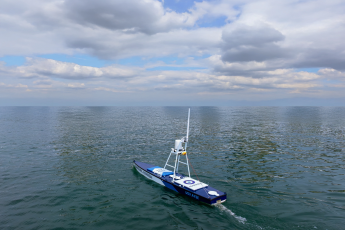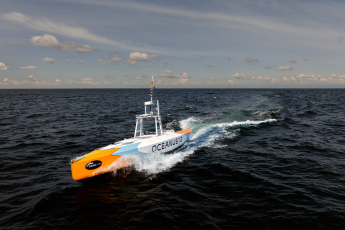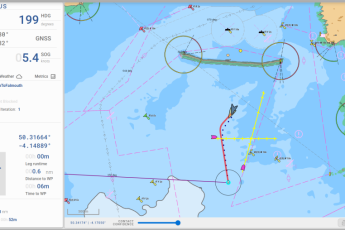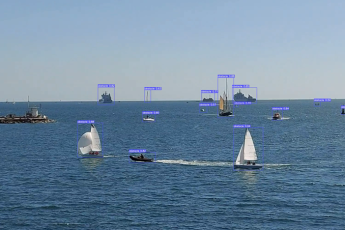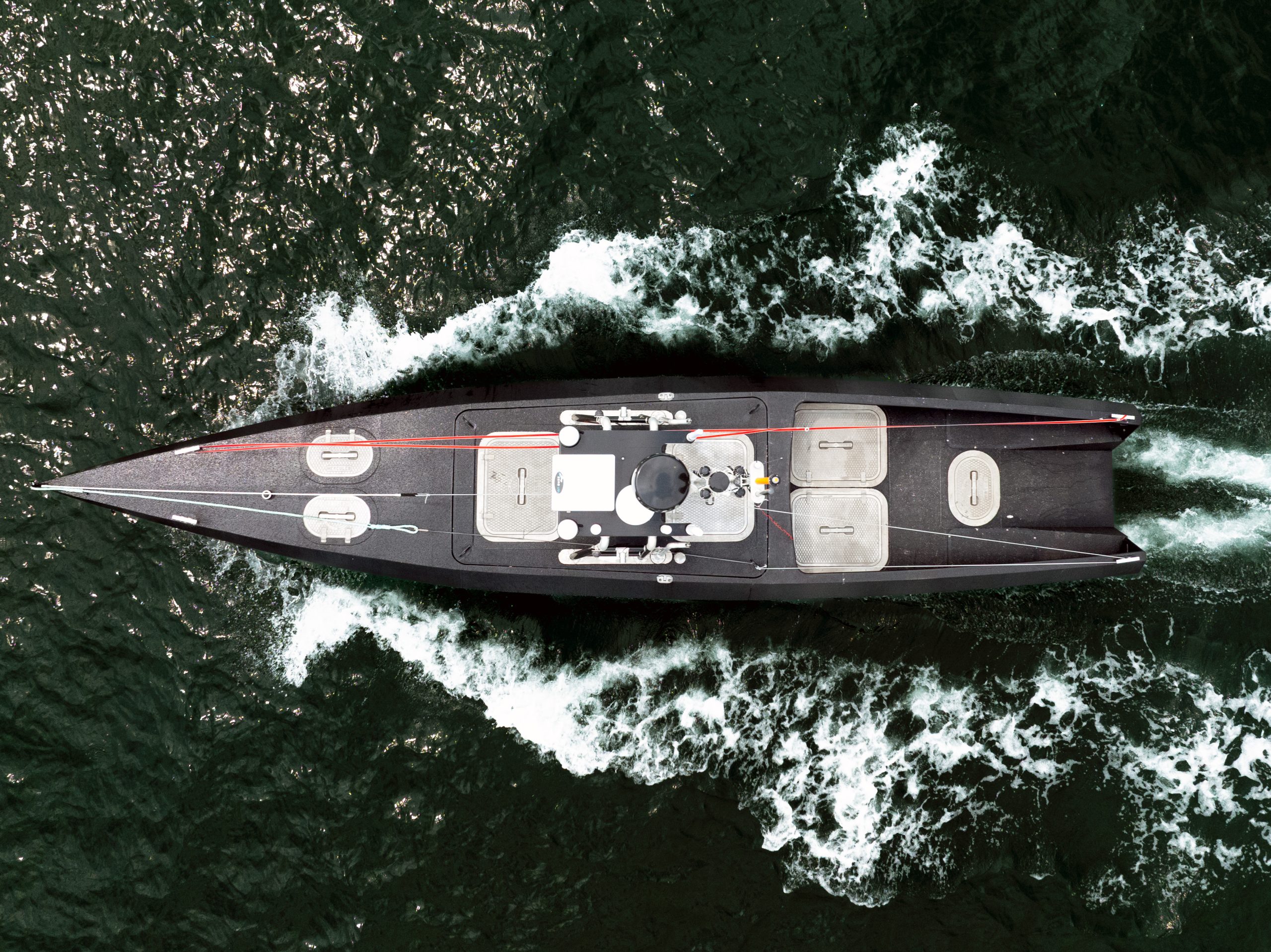
Autonomous vessels need to do more than know where they are and follow a planned route. They must continuously understand what is happening around them, identify other vessels and hazards, assess whether a collision risk is developing, and decide what action to take.
For a human bridge team, this process combines visual observation, radar, AIS, navigational data, professional judgement and the International Regulations for Preventing Collisions at Sea (COLREGs). An autonomous vessel must bring many of these capabilities together digitally.
This is where collision avoidance software for vessels becomes a critical part of maritime autonomy.
Using data from multiple sensors, artificial intelligence (AI), tracking algorithms and autonomous navigation systems, a vessel can build a real-time picture of its surroundings and continually evaluate how that picture is changing. When a potential conflict is identified, the autonomy system can determine an appropriate response, such as altering course or speed, while taking account of navigational constraints and COLREGs.
The objective is not simply to react when another vessel gets too close. Effective collision avoidance is predictive: identifying developing risks early enough to take safe, understandable and proportionate action.
What is autonomous vessel collision avoidance?
Autonomous vessel collision avoidance is the process of detecting potential collision risks, predicting how those risks may develop and determining an appropriate navigational response without relying solely on direct human control.
It forms part of a wider autonomy chain.
Sensors first gather information about the vessel and its surroundings. Sensor fusion combines those inputs to create a coherent picture of the operating environment. Collision avoidance and decision-making systems then use that information to determine whether action is required.
This can be thought of as:
Sense → Understand → Predict → Decide → Act → Monitor
The process is continuous. Once an autonomous vessel changes course or speed, it must continue monitoring the situation to determine whether the action has reduced the risk and whether further action is required.
This distinction is important. Situational awareness tells an autonomous vessel what is happening around it; collision avoidance determines what the vessel should do about it.
How does collision avoidance software for vessels work?
Collision avoidance software continuously analyses the vessel’s own movement alongside the position, speed, heading and behaviour of surrounding traffic.
The process typically involves several stages:
- Detect objects and vessels in the surrounding environment.
- Track their position and movement over time.
- Classify relevant objects where possible.
- Predict their future trajectories.
- Assess whether those trajectories create a collision risk.
- Determine the navigational relationship between the vessels.
- Plan an appropriate avoidance manoeuvre.
- Execute the manoeuvre through the vessel’s control systems.
- Reassess the situation continuously.
The result is a dynamic process rather than a single decision.
A vessel encountered several miles away may initially represent little risk. As both vessels move, however, their predicted tracks may converge. The autonomy system therefore needs to recognise the developing situation rather than waiting until the vessels are dangerously close.
How does an autonomous vessel detect other vessels?
Autonomous vessels can use several complementary sensors and data sources to detect and understand surrounding traffic.
These may include radar, cameras, AIS, GNSS/GPS, LiDAR and other navigational or environmental sensors, depending on the vessel and its operational requirements.
Each provides a different type of information.
Radar can identify objects and measure their relative position and movement, including in conditions where visual detection may be difficult. Cameras provide visual information that can be interpreted using computer vision. AIS can provide transmitted information about appropriately equipped vessels, including identity, position, course and speed.
No single sensor is necessarily sufficient in every situation.
An AIS contact, for example, depends upon the other vessel transmitting usable AIS information. A camera can provide valuable visual information but its performance may be affected by darkness, glare, rain, fog or sea state.
Combining different sources through sensor fusion can therefore create a more resilient picture of the environment.
This builds on the situational-awareness process used by autonomous vessels: sensor fusion establishes a consolidated understanding of what is around the vessel, which can then be used by collision avoidance software to support navigational decisions.
How does AI identify a collision risk?
Detecting another vessel does not automatically mean there is a collision risk.
An autonomy system needs to understand how both vessels are moving and determine whether their projected paths are likely to bring them dangerously close together.
Two important concepts are Closest Point of Approach (CPA) and Time to Closest Point of Approach (TCPA).
What is CPA?
Closest Point of Approach (CPA) is the predicted minimum distance that will occur between two moving vessels if they continue on their current courses and speeds.
A small CPA may indicate that the vessels will pass too close to one another.
What is TCPA?
Time to Closest Point of Approach (TCPA) estimates how long it will take before the vessels reach their predicted closest point.
Together, CPA and TCPA help an autonomous navigation system determine both the potential severity and urgency of an encounter.
But collision avoidance cannot depend upon these measurements alone.
Vessels change course and speed. Environmental conditions change. Other traffic enters and leaves the operating area. An autonomous system must therefore continually update its calculations as new sensor information becomes available.
AI and other computational techniques can help identify patterns within this changing information and predict how an encounter is likely to develop.
How does AI predict where another vessel will go?
At its simplest, a navigation system can project another vessel’s future position from its current course and speed.
Real maritime environments are more complicated.
A vessel may begin turning. Its speed may increase or decrease. Its movement may be constrained by a channel, harbour entrance, traffic separation scheme or other navigational feature.
Collision avoidance software therefore needs to continually reassess a contact’s trajectory as new information arrives.
This is where AI can contribute to maritime autonomy.
Rather than treating the environment as a collection of static objects, AI-assisted systems can help interpret changing sensor data, identify relevant patterns and support predictions about how the situation may evolve.
The autonomous vessel can then compare possible future states rather than responding only to the situation that exists at that instant.
What are COLREGs?
Autonomous collision avoidance does not take place in isolation. Vessels operate within established navigational rules.
The International Regulations for Preventing Collisions at Sea, commonly known as COLREGs, establish internationally recognised rules governing how vessels should behave when there is a risk of collision.
They address issues including lookout, safe speed, risk assessment and the actions vessels should take during different types of encounters.
For autonomous shipping, COLREGs present an important challenge: it is not enough for a vessel to identify a collision-free trajectory mathematically. Its behaviour must also take account of the navigational rules and be understandable to other vessels sharing the water.
How can autonomous vessels comply with COLREGs?
An autonomous vessel must first establish what type of encounter is developing.
Common situations include:
Head-on encounters: two vessels are approaching approximately from opposite directions.
Crossing situations: the paths of two vessels cross, requiring the system to determine their respective responsibilities.
Overtaking situations: one vessel is approaching another from behind in a way that constitutes overtaking.
The autonomy system can use the relative position, bearing, course and speed of surrounding vessels to help classify the encounter.
Once that relationship has been established, the collision avoidance system can evaluate possible manoeuvres within the relevant navigational context.
This is significantly more sophisticated than simply calculating the shortest route around another object.
Why can’t an autonomous vessel simply steer around an obstacle?
The mathematically shortest collision-free path is not necessarily the safest or most appropriate maritime manoeuvre.
Other vessels need to be able to interpret what is happening.
A small series of course changes might theoretically avoid a collision, for example, but could create uncertainty for another vessel’s bridge team. A clearer and more substantial alteration made at an appropriate time may be easier for other mariners to understand.
The autonomous system must also consider what else is around it.
Avoiding one vessel cannot be allowed to create a new conflict with another vessel, a navigational hazard or an area of shallow water.
Collision avoidance therefore needs to work within a broader route-planning and vessel-control environment.
What is the difference between collision avoidance and autonomous navigation?
The two functions are closely connected but they are not the same.
Autonomous navigation concerns the wider task of moving a vessel safely from one location to another. It can include route planning, localisation, situational awareness, vessel control and responding to changing conditions.
Collision avoidance focuses specifically on recognising and resolving situations in which another vessel or obstacle may create a collision risk.
An autonomous vessel might therefore have a planned route towards a waypoint, while its collision avoidance system continually monitors the route ahead.
If another vessel creates a conflict, the system may temporarily modify the vessel’s course or speed. Once the encounter has been safely resolved, the wider navigation system can determine how the vessel should return towards its intended route.
What happens when several vessels present collision risks?
One-to-one encounters are relatively straightforward compared with busy maritime environments.
An autonomous vessel may simultaneously encounter commercial shipping, fishing vessels, leisure craft, harbour traffic and fixed navigational hazards.
A manoeuvre that safely resolves one encounter could make another worse.
Collision avoidance software therefore needs to evaluate the wider traffic picture rather than considering each contact completely independently.
The system can assess alternative manoeuvres against multiple constraints, including predicted vessel trajectories, available sea room, navigational hazards and the vessel’s intended route.
As circumstances change, those options can be recalculated.
This ability to repeatedly evaluate a complex and changing environment is one of the areas where computational decision-making can be particularly valuable.
How does weather affect autonomous collision avoidance?
The marine environment introduces another layer of complexity.
Wind, waves, currents, visibility and sea state can all influence how a vessel behaves and how effectively its sensors operate.
A planned manoeuvre must therefore be physically achievable by the vessel under the prevailing conditions.
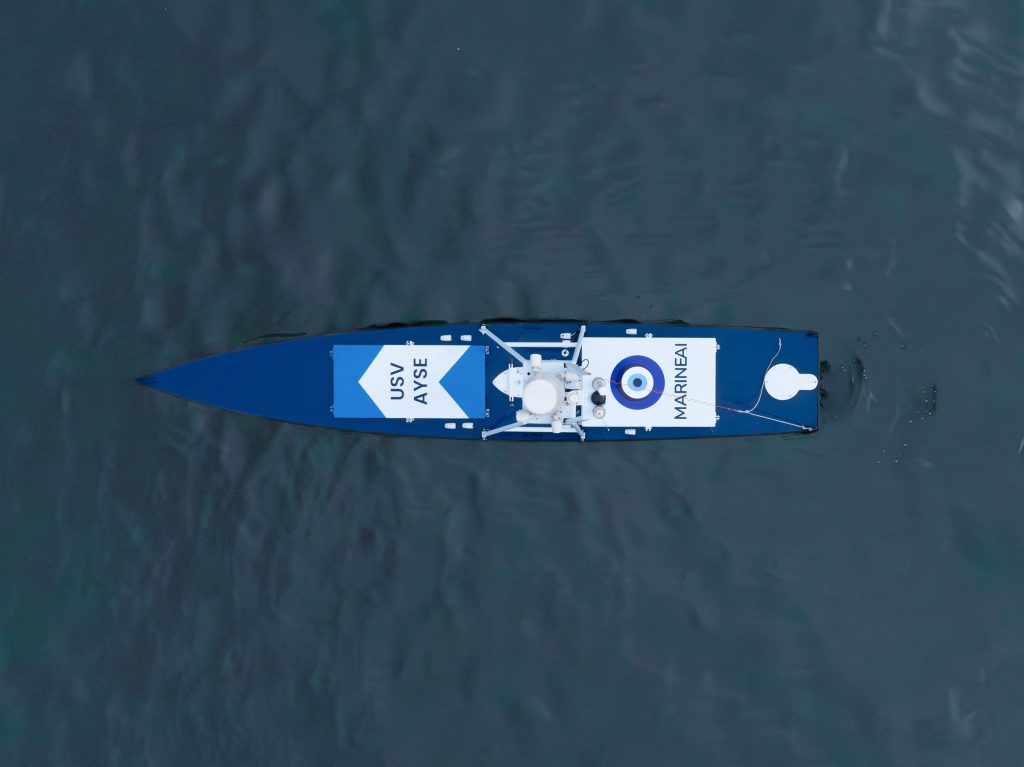
Different vessels also respond differently. A manoeuvre appropriate for a small, highly manoeuvrable uncrewed surface vessel may not be appropriate for a much larger craft with different acceleration, turning and stopping characteristics.
Effective autonomy therefore requires an understanding not only of surrounding traffic but also of the vessel’s own capabilities.
What happens after an autonomous vessel takes avoiding action?
Collision avoidance does not finish when a manoeuvre begins.
The vessel must continue sensing and reassessing the environment.
Has the other vessel maintained its course?
Has it also altered course?
Is CPA increasing?
Has another vessel entered the area?
Is the original route now safe to resume?
The autonomy system can use updated sensor information to answer these questions and determine whether the original avoidance strategy remains appropriate.
This creates a closed decision loop:
Observe → Assess → Act → Reassess
The ability to continually monitor the consequences of a decision is fundamental to autonomous operation.
How is collision avoidance different from a conventional autopilot?
A conventional autopilot primarily maintains a commanded heading or track.
Collision avoidance requires considerably greater situational understanding.
The system must perceive surrounding traffic, identify potential conflicts, understand how those conflicts may develop and determine an appropriate response.
In an autonomous vessel, this decision can then be passed to the vessel-control system for execution.
The distinction is therefore between following an instruction and determining what instruction is required.
What role does the human operator play?
Autonomous operation does not necessarily mean that humans disappear from vessel operations.
Depending upon the vessel, level of autonomy and operational concept, shore-based personnel may supervise a mission from a Remote Operation Centre (ROC).
The autonomy system can handle routine perception, navigation and decision-making while providing operators with information about vessel status and significant events.
Where human intervention is required, remote operators may be able to review the vessel’s situational picture and take appropriate action.
This creates an important distinction between remote control and autonomy. A remotely controlled vessel depends upon a human to make navigational decisions, while an autonomous vessel can make at least some of those decisions itself.
From situational awareness to autonomous decision-making
Collision avoidance demonstrates why maritime autonomy is much more than removing the crew from a vessel.
The vessel must recreate digitally many of the processes involved in safe navigation: observing its surroundings, interpreting what it sees, predicting what may happen next and selecting an appropriate response.
AI can support this process by helping autonomous systems interpret complex sensor information and make sense of changing maritime environments.
Sensor fusion provides the situational picture. Collision avoidance software assesses developing risks. COLREG-aware decision-making provides a framework for appropriate navigational behaviour. Vessel-control systems then turn those decisions into physical action.
Together, these capabilities enable an autonomous vessel to move from simply seeing the maritime environment to making decisions within it.
For Marine AI, this approach forms part of the wider development of intelligent vessel autonomy, where perception, decision-making, navigation and control work together to support safe and effective uncrewed and autonomous operations.
Frequently Asked Questions
How do autonomous vessels avoid collisions?
Autonomous vessels can use radar, cameras, AIS and other sensors to detect surrounding traffic and hazards. Sensor-fusion and collision-avoidance systems combine this information, predict how encounters may develop and determine whether changes to course or speed are required.
What is collision avoidance software for vessels?
Collision avoidance software analyses a vessel’s surroundings to identify potential collision risks and determine an appropriate response. It can track other vessels, predict their movement, calculate measures such as CPA and TCPA, assess possible manoeuvres and continually reassess the situation as it changes.
What are COLREGs?
COLREGs are the International Regulations for Preventing Collisions at Sea. They provide internationally recognised navigational rules covering matters including lookout, safe speed, collision risk and the actions vessels should take during encounters with other vessels.
Can autonomous vessels comply with COLREGs?
Autonomous navigation systems can be designed to take COLREGs into account when assessing encounters and planning collision-avoidance manoeuvres. This involves identifying the type of encounter, determining the navigational relationship between vessels and selecting an appropriate action while continuing to monitor the situation.
What are CPA and TCPA?
CPA means Closest Point of Approach and represents the predicted minimum distance between two vessels if their current movements continue. TCPA means Time to Closest Point of Approach and estimates when that closest point will occur. Both can help assess collision risk.
Does an autonomous vessel need AIS to avoid collisions?
No. AIS can provide valuable information about appropriately equipped vessels, but autonomous systems can also use sensors such as radar and cameras. Combining multiple sources reduces reliance on any single source of information.
What is the difference between sensor fusion and collision avoidance?
Sensor fusion combines information from multiple sensors to create a more coherent picture of the vessel’s surroundings. Collision avoidance uses that situational picture to assess risk and determine whether navigational action is necessary.
What is the difference between autonomous navigation and collision avoidance?
Autonomous navigation is the broader process of safely navigating a vessel towards its destination. Collision avoidance is one component of that process, specifically concerned with identifying and resolving potential conflicts with other vessels or obstacles.
Can AI predict the movement of other vessels?
AI and other computational techniques can support trajectory prediction by analysing information such as a vessel’s position, course, speed and changing movement. Predictions must be continually updated because vessels can alter their behaviour and operating conditions can change.
Are autonomous vessels controlled by humans?
Some autonomous vessels can perform navigational functions without continuous direct human control while remaining supervised by shore-based personnel. Depending on the operating concept, personnel in a Remote Operation Centre may monitor the vessel and intervene when required.