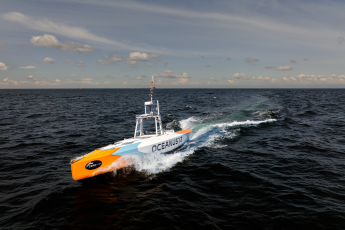
An autonomous vessel brings together several capabilities: understanding its surroundings, deciding how to proceed, controlling its movement and carrying out its mission.
Marine autonomy systems connect these functions. Sensors provide information about the vessel and its environment. Software interprets that information and evaluates possible actions. Control systems translate decisions into movement, while operators monitor progress and manage the mission.
For vessel builders and operators, understanding these connections helps explain what an autonomy platform needs to deliver—and how to assess whether it suits a particular operation.

What is a marine autonomy system?
A marine autonomy system combines hardware and software to enable a vessel to perform defined functions with varying levels of human involvement.
Its scope depends on the application. A crewed vessel may use autonomy technology to support situational awareness and navigational decisions. An uncrewed vessel may execute a planned mission while personnel supervise it remotely.
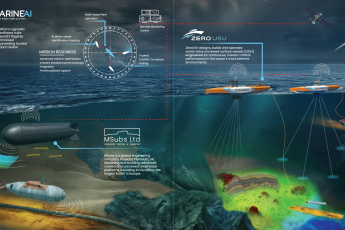
At Marine AI, the GuardianAI™ Suite uses a modular architecture to support navigation, situational awareness and vessel operations across crewed, uncrewed and autonomous platforms.
How the main capabilities work together
Understanding the vessel and its surroundings
The system needs information about both the vessel’s own movement and the surrounding environment.
Depending on the installation, inputs may include radar, cameras, AIS, satellite positioning and inertial sensors. These sources serve different purposes: positioning equipment helps establish where the vessel is, while radar and cameras can help detect surrounding objects.
Sensor fusion combines relevant inputs into a coherent operational picture. This gives navigation software and human operators a shared basis for understanding nearby traffic and hazards.
Read more about sensor fusion for autonomous vessels.

Planning routes and responding to traffic
Navigation software uses the available information to determine how the vessel should proceed.
Route planning considers the wider journey or mission. Collision avoidance addresses developing encounters with other vessels and obstacles. These capabilities must work together: an avoidance manoeuvre needs to account for surrounding traffic, available sea room and the vessel’s intended route.
The system must also keep reassessing the situation. Another vessel may change course, or a new contact may appear while an encounter is underway.
Our guide to how autonomous vessels avoid collisions explores this process in more detail.
Turning decisions into vessel movement
Once a navigational action has been selected, vessel-control systems execute it through the relevant steering, propulsion and actuator interfaces.
Marine AI describes GuardianAI Autonomy through three connected layers: Sense, Decide and Act. These bring together situational awareness, tactical planning and vessel control. Its Inspect interface allows operators to monitor the vessel and manage mission plans remotely. Explore GuardianAI Autonomy.
Connecting navigation with the mission
A vessel’s operational objective often extends beyond reaching a destination.
A survey platform may need to follow a sequence of survey lines. An inspection vessel may need to visit several locations. A patrol vessel may need to remain within a designated area.
Route planning therefore needs to support the mission’s requirements. The appropriate route may depend on navigational constraints, environmental conditions, vessel performance and the priorities assigned to the operation.
For example, a survey mission may require a consistent track through an operating area. If the vessel diverts, its subsequent movements need to account for both safe navigation and the remaining task. The available responses depend on the platform’s capabilities and authorised operating limits. Learn about AI route planning for autonomous vessels.
Where human operators fit
Human involvement varies with the vessel and operating model.
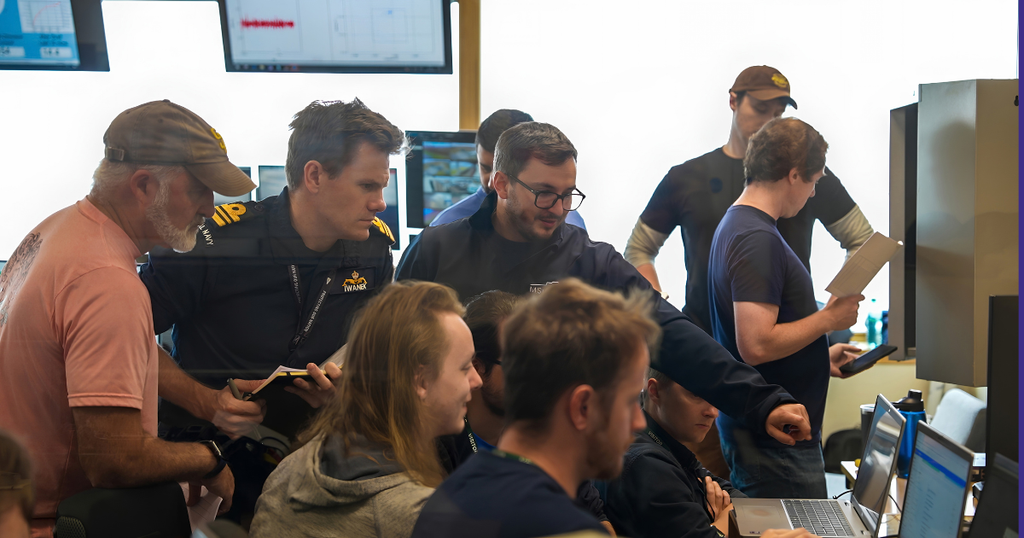
Personnel in a Remote Operation Centre may directly control a vessel, supervise autonomous activity or respond when the system requires intervention. Operators need access to relevant vessel status, mission information and operational controls.
This relationship should be defined when the operation is designed. Teams need to understand which functions the vessel performs independently, when an operator becomes involved and how responsibility transfers between operating modes.
Our article on Remote Operation Centres explains how shore-based supervision supports autonomous vessel operations.
Questions to ask when evaluating a marine autonomy system
A useful starting point is the proposed operation. Vessel builders and operators can then assess how each system supports it.
Questions to explore include:
- Mission requirements: Which tasks must the vessel perform, and what defines successful completion?
- Integration: Which sensors, vessel controls and payloads must the platform connect?
- Operating limits: Under what conditions has the proposed configuration been demonstrated?
- Human supervision: What information and controls will operators receive, and when must they intervene?
- Exceptional situations: What behaviour is defined for communications loss, sensor faults or interrupted missions?
- Evidence: What simulation, integration testing and sea-trial evidence supports the intended use?
These questions provide a practical framework for technical discussions. They help connect individual software capabilities with the demands of the complete vessel operation.
Marine autonomy built around the operation
Effective marine autonomy depends on how sensing, decision-making, vessel control and human supervision work together.
At Marine AI, we develop autonomy software that connects these capabilities across different vessel platforms and operational requirements.
Explore the GuardianAI™ Suite to discuss the capabilities your vessel and mission require.