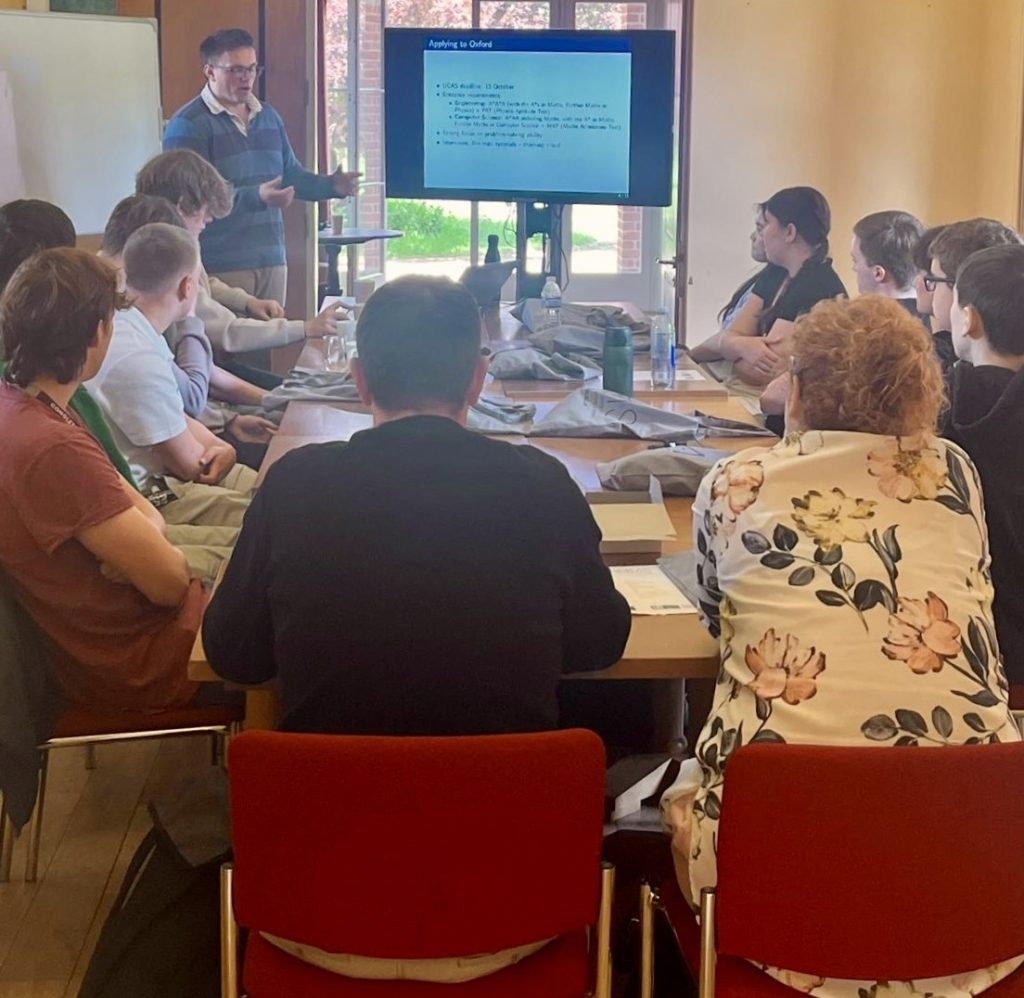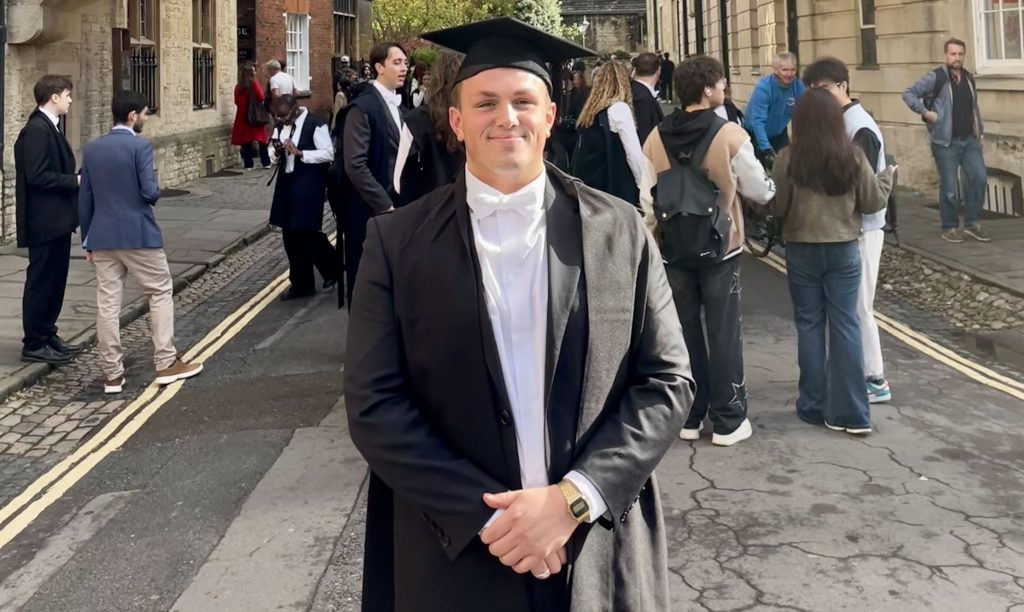
When John Belcher-Heath joined Marine AI as an intern in 2022, he began applying his mathematical background to real-world engineering challenges. Today, alongside working part-time at Marine AI, he’s pursuing a DPhil (PhD) at the University of Oxford. Here he is researching how artificial intelligence can help autonomous systems such as underwater gliders make smarter decisions in uncertain environments.
Marine AI is supporting John’s doctoral research at the University of Oxford, where he is studying as part of the Autonomous Intelligent Machines and Systems (AIMS) Centre for Doctoral Training. He is part of the research group Goal-Oriented Long-Lived Systems (GOALS) where his work is bringing together academic innovation and practical maritime autonomy.
Smarter Decision-Making Beneath the Waves
Underwater gliders are energy-efficient autonomous vehicles that can remain at sea for months, collecting valuable environmental data. However, planning their missions is far from simple. Once underwater, communication is limited and changing ocean currents and conditions make it difficult to accurately predict where an underwater glider will surface. Traditional physics-based models provide accurate predictions but require significant computing power, something that’s in short supply on a long endurance autonomous vehicle.
John’s research explores how AI and machine learning can solve this problem. By replacing computationally intensive physics models with learned AI models, the glider can predict its future behaviour more efficiently. This allows it to evaluate more possible routes and make better-informed decisions while operating independently.
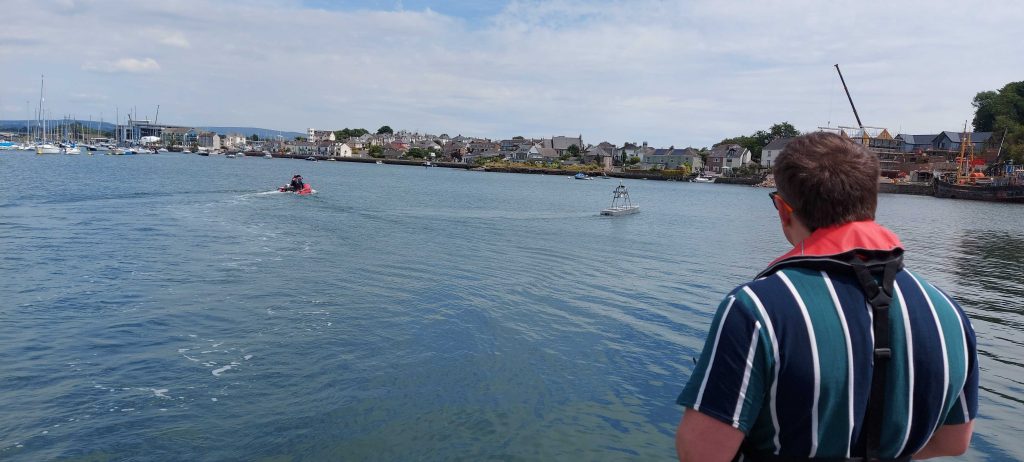
“My research focuses on long-term autonomy for maritime autonomous systems. In particular, I study how these systems can account for uncertainty in the open-water environment when developing route plans that may need to remain effective for weeks, months, or even years.”
Bridging Research and Industry
John graduated from the University of St Andrews with a First-Class master’s degree in mathematics. After joining Marine AI in his second year, he has now spent more than four years working on projects involving computer vision, sensor fusion and autonomous planning. His industry experience plays a key role in shaping his research. Drawing on both his work at Marine AI and his doctoral studies, he brings together practical engineering insight and academic research to develop a comprehensive approach to solving complex challenges.
“Working with Marine AI allows me to maintain a strong understanding of current business and industry challenges, while my supported studies keep me informed of the latest developments in research and technology. Together, these experiences give me a holistic and pragmatic perspective on maritime autonomy.”
Looking to the Future
With a passion for sharing knowledge and inspiring the next generation of engineers through workshops and public engagement activities, John enjoys communicating the opportunities of autonomous systems to a wider audience. His goal is to develop AI techniques that make autonomous maritime systems more adaptable and capable of operating in uncertain environments. John is ambitious to be an expert in his field combining machine learning with advanced planning methods, helping autonomous vehicles make better decisions with limited onboard resources. As his research continues at Oxford, Marine AI is proud to support the development of technologies that have the potential to improve ocean monitoring, scientific research and the future of maritime autonomy.